Protein for Muscle Gain: How Much, When to Eat It and a Sample Day
Building muscle? Aim for about 1.6 g of protein per kg (0.7 g/lb) a day over 4 meals. Chart by weight, what timing really matters and a sample day.

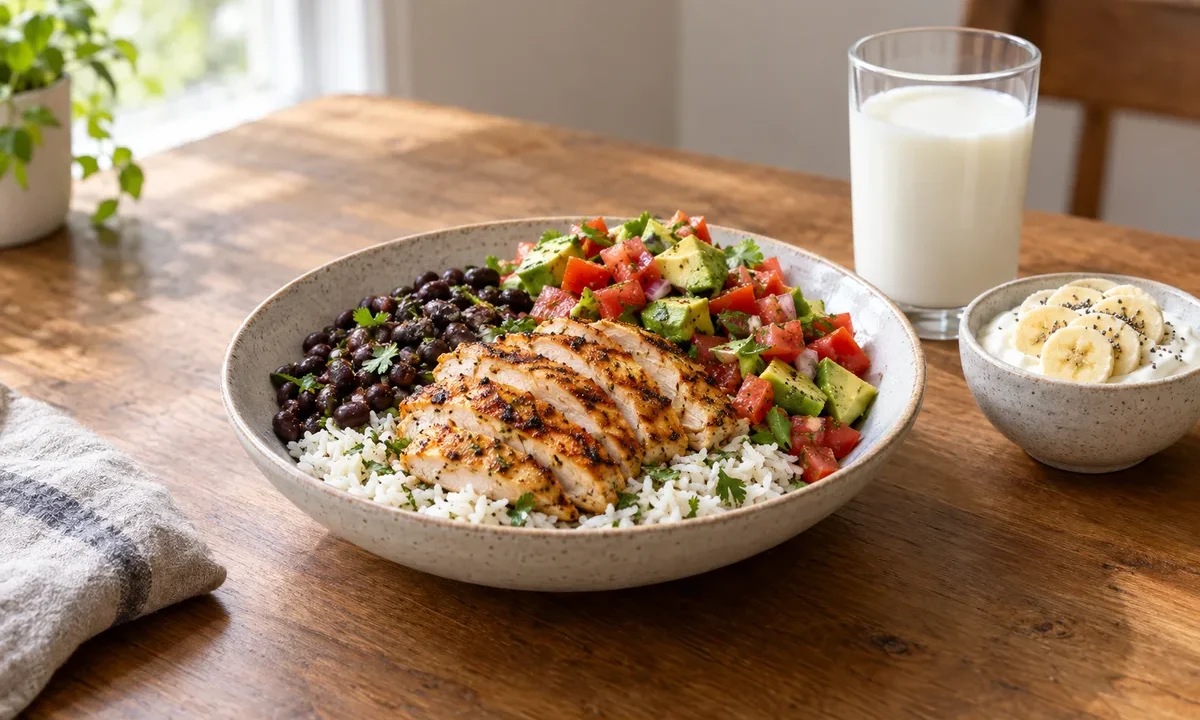
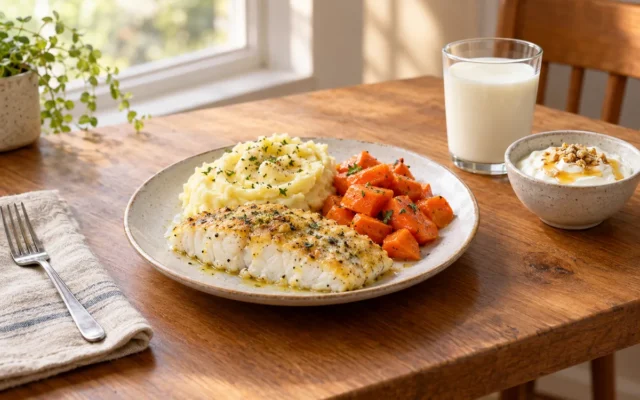
To build muscle, the most widely used benchmark is about 1.6 g of protein per kilogram of body weight per day (roughly 0.7 g per pound), split across 3–5 meals of 20–40 g. For a 165-lb (75 kg) person, that works out to about 120 g a day. It’s the point where a meta-analysis of 49 trials (Morton et al., 2018) stopped finding extra gains in lean mass. Protein doesn’t build muscle by itself, though. Lifting is the signal, and you need enough calories to grow. Below: how much to eat for your weight, how to spread it out, what actually matters about timing, and a full day of eating with regular food.
Quick note: if you have kidney disease, diabetes with complications, are pregnant or follow a medically prescribed diet, set your protein target with your doctor or a registered dietitian.
In this article
How much protein you need to build muscle
Start with 1.6 g/kg
In Morton’s meta-analysis, published in the British Journal of Sports Medicine, extra protein gave a modest boost to muscle and strength gains in people doing resistance training. The benefit leveled off around 1.6 g/kg a day. The authors also noted that some people may get a little more out of intakes up to about 2.2 g/kg. Treat 1.6 g/kg as a solid working number, not a hard ceiling.
The ISSN range: 1.4–2.0 g/kg
The International Society of Sports Nutrition (ISSN) puts the sufficient range for most people who exercise at 1.4–2.0 g/kg a day. If you’re new to lifting, the lower end is plenty. Eating 3 g/kg won’t build more muscle; the extra just gets burned for energy.
Protein chart by body weight
Rounded grams per day.
| Body weight | Benchmark (1.6 g/kg) | ISSN range (1.4–2.0 g/kg) | Per meal (4 meals) |
|---|---|---|---|
| 120 lb (55 kg) | 88 g | 77–110 g | 22–25 g |
| 145 lb (65 kg) | 104 g | 91–130 g | 25–30 g |
| 165 lb (75 kg) | 120 g | 105–150 g | 30 g |
| 185 lb (85 kg) | 136 g | 119–170 g | 34 g |
| 210 lb (95 kg) | 152 g | 133–190 g | 38 g |
Carrying a fair amount of extra body fat? Using your total weight can inflate the number. A practical fix is to use a reference weight closer to a healthy range for you. For the full math, see how much protein you need per day.
How to spread protein across the day
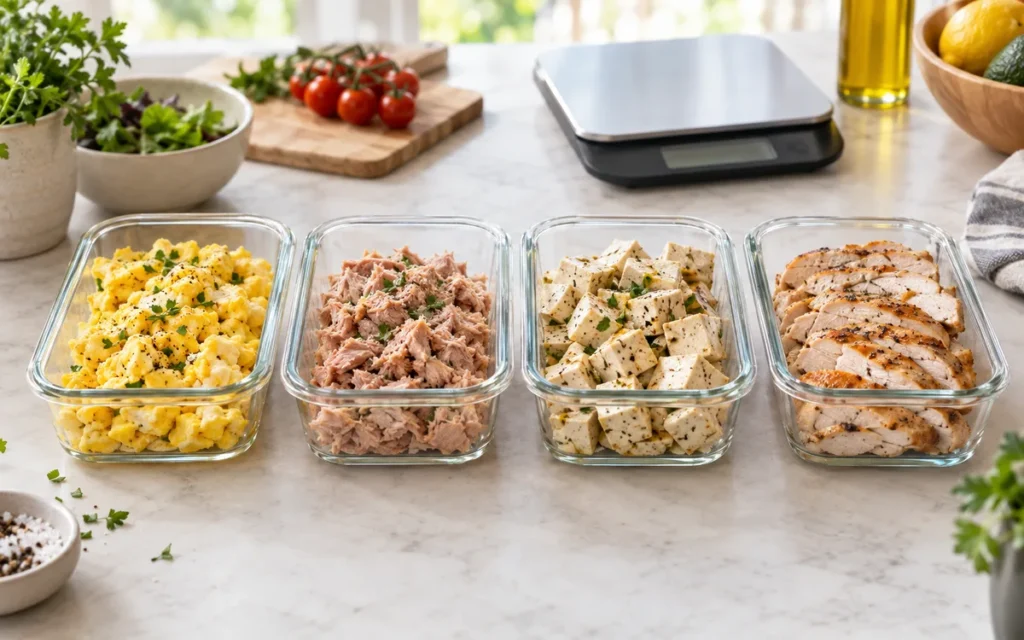
A review by Schoenfeld and Aragon (2018) offers a simple rule: about 0.4 g/kg per meal over at least four meals. At 165 lb, that’s 30 g a meal, or 120 g a day. The ISSN’s guidance lands in the same place: 20–40 g every 3–4 hours.
The classic mistake is a near-zero protein breakfast followed by a huge dinner. A bagel with jam and coffee gives you maybe 10 g. Swap it for two eggs and a glass of milk, or Greek yogurt with oats, and you’re at 20–25 g before 9 a.m. Need ideas? Start with these quick, healthy breakfast ideas.
Is there a per-meal limit?
The “your body can only absorb 30 g” line is a myth. You absorb nearly all the protein you eat. What researchers debate is how much the muscle puts to use right away. That’s why spreading it out is more efficient, but a 50 g dinner isn’t wasted.
Timing: does it matter when you eat it?
Less than gym lore suggests. The famous 30-minute “anabolic window” is much wider than people thought. According to the ISSN, protein anywhere from a few hours before to a few hours after training works. What matters most is your daily total, then a sensible spread.
- Training fasted (say, first thing in the morning)? Then yes, eat something with protein soon after.
- Ate a meal 2–3 hours before? No need to chug a shake in the locker room. Your next regular meal is fine.
- Before bed, 30–40 g of protein (a big bowl of Greek yogurt, or cottage cheese with fruit) is something the ISSN considers useful. Optional, but handy if it helps you hit your total.
Calories: the part people skip
Hitting 1.6 g/kg while eating far below your needs won’t add much muscle. To grow, you need to eat a little more than you burn. A practical approach is a small surplus, around 200–300 calories a day, with a weigh-in check every 2–3 weeks. Scale not moving? Add a serving of rice, bread, oats or nuts. Climbing fast and mostly around your waist? Pull back a bit.
Best protein sources for muscle gain
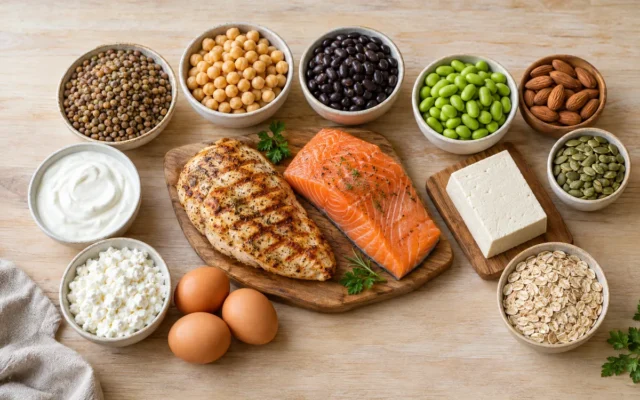
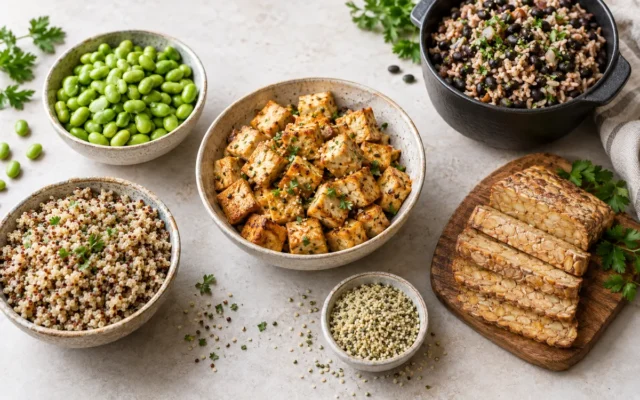
Both amount and quality count. Animal proteins and soy contain all the essential amino acids and a good dose of leucine, the amino acid most tied to switching on muscle protein synthesis. Beans and grains count too; eat a mix over the day and you’re covered (more in our guide to complete plant proteins).
| Food | Serving | Approx. protein | Approx. calories |
|---|---|---|---|
| Chicken breast, cooked | 4 oz (115 g) | 35 g | 190 |
| Canned tuna in water, drained | 1 can (about 4 oz) | 25–28 g | 120 |
| Plain Greek yogurt | 1 cup (225 g) | 20–23 g | 145–215 |
| Cottage cheese | 2/3 cup (150 g) | 16–18 g | 140 |
| Eggs | 3 large | 19 g | 215 |
| Firm tofu | 5 oz (150 g) | 21–25 g | 215 |
| Cooked lentils | 1 cup | 18 g | 230 |
| Milk | 1 cup (8 fl oz) | 8 g | 100–150 |
Approximate values based on USDA FoodData Central; brands vary. For a longer list, see our high-protein foods list. On a budget? Our ranking of the cheapest protein sources breaks it down by cost.
A sample day with about 125 g of protein
Built for a 165-lb (75 kg) person who trains in the afternoon. Amounts are a starting point, not a prescription.
| Meal | What to eat | Protein | Calories |
|---|---|---|---|
| Breakfast | 1/2 cup oats cooked in 1 cup milk + 2 scrambled eggs | 27 g | 480 |
| Lunch | 4 oz grilled chicken, 1 cup cooked rice, side salad with 1 tbsp olive oil | 41 g | 520 |
| Post-workout | 7 oz Greek yogurt + 1 banana + a small handful of peanuts | 24 g | 340 |
| Dinner | 3 oz dry pasta tossed with a can of tuna and marinara | 35 g | 510 |
| Total | ~127 g | ~1,850 |
Look at that calorie line. About 1,850 is too low for most people trying to gain. Protein is already handled, so the fix comes from carbs and fats: a bigger portion of rice or pasta, toast with peanut butter, fruit, a handful of nuts. For more menu ideas, including a vegetarian version, see how to eat 100 grams of protein a day.
Common mistakes
- Loading up on protein and skimping on everything else. Low on carbs, your workouts suffer.
- Living on shakes. Convenient, not required. A cup of Greek yogurt or a glass of milk does the same job. If you like blending, try our high-protein smoothies without protein powder.
- Changing the plan every week. Muscle is built over months. Keep your protein target steady and track progress in the gym, not on the daily scale.
- Short sleep. Recovery counts, and it’s usually the first thing to go.
The bottom line
- For muscle gain, a typical benchmark is 1.6 g of protein per kg a day (about 0.7 g per pound), within a 1.4–2.0 g/kg range.
- Spread it over four meals of about 0.4 g/kg (20–40 g each).
- Exact timing matters little: your daily total does the heavy lifting.
- Without strength training and enough calories, extra protein won’t do much.
- With kidney disease or another condition, check with your doctor or dietitian before eating more.
Sources
- Morton RW, et al. A systematic review, meta-analysis and meta-regression of the effect of protein supplementation on resistance training-induced gains in muscle mass and strength in healthy adults. British Journal of Sports Medicine, 2018.
- Jäger R, et al. International Society of Sports Nutrition Position Stand: protein and exercise. Journal of the International Society of Sports Nutrition, 2017.
- Schoenfeld BJ, Aragon AA. How much protein can the body use in a single meal for muscle-building? Implications for daily protein distribution. Journal of the International Society of Sports Nutrition, 2018.
- Harvard T.H. Chan School of Public Health. The Nutrition Source: Protein.
- NIDDK. Healthy Eating for Adults with Chronic Kidney Disease.
- USDA. FoodData Central.
Frequently asked questions
How much protein do I need to build muscle?
A typical benchmark is 1.6 g per kg of body weight a day (about 0.7 g per pound), within a 1.4–2.0 g/kg range. For a 165-lb person that's about 120 g a day, split into four meals of roughly 30 g.
Do I need protein right after a workout?
Not necessarily. Your daily total matters most. If you ate a meal 2–3 hours before training, your next regular meal is enough. If you train fasted, eat some protein soon after.
Do I need protein powder to gain muscle?
No. Eggs, dairy, chicken, tuna, tofu and beans can get you to your target. Powder is just a convenience if food alone is hard to fit in.
Will eating more than 2 g/kg build more muscle?
Generally no. Research doesn't show extra lean mass gains above roughly 1.6–2.2 g/kg. If you have kidney disease, talk to your doctor before increasing protein.
Nutrition values are approximate. This content is informational and does not replace advice from a dietitian or doctor, especially if you have kidney disease or another condition that requires a special diet.