Complete Plant Proteins: What They Are, a Chart, Pairings and Myths
Soy, quinoa, amaranth and buckwheat are complete plant proteins. What that means, a protein chart, easy pairings, and why you don't need to combine.

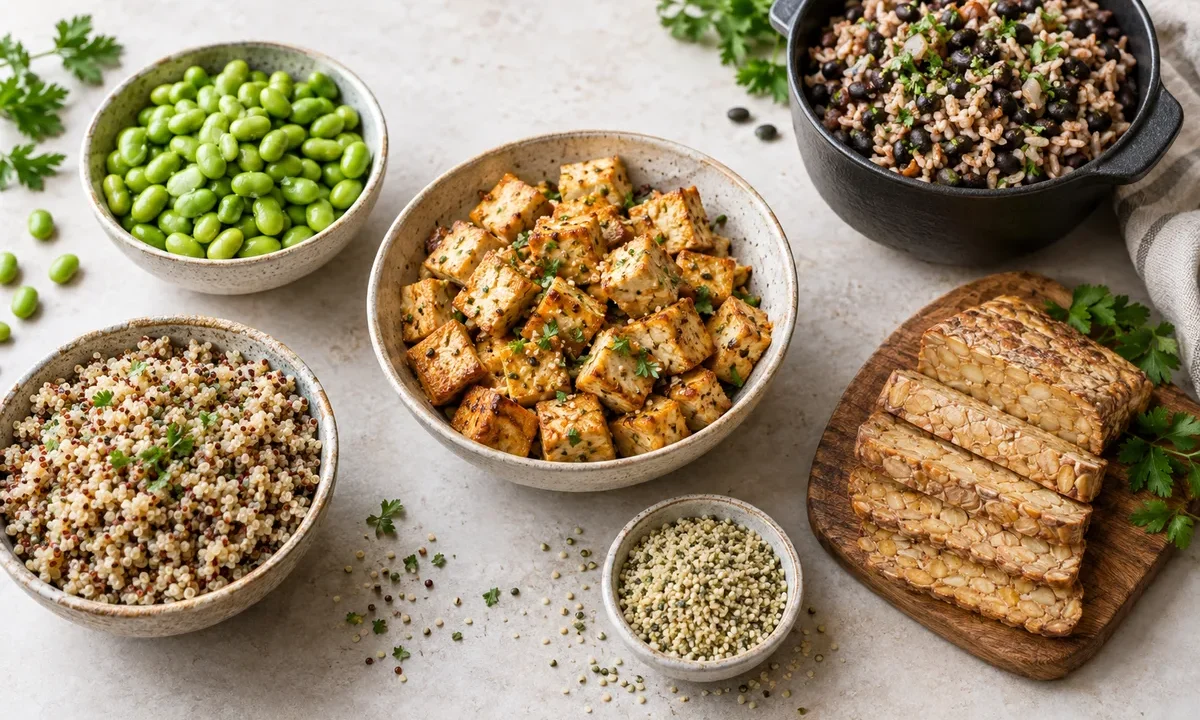
A protein is “complete” when it supplies all 9 essential amino acids in adequate amounts. The best-known complete plant proteins are soy (tofu, tempeh, edamame), quinoa, amaranth and buckwheat. You don’t have to live on those, though. Eat a mix of beans and grains over the course of the day (not necessarily on the same plate) and you’ll cover every amino acid. Below: what “complete” actually means, what each food group is short on, a chart with protein per serving, and the myths worth dropping.
If you’re fully vegan, pregnant or managing a health condition, it’s worth planning your diet with a registered dietitian. Vitamin B12, for one, needs a supplement on a vegan diet.
In this article
What “complete protein” means
Proteins are built from 20 amino acids. Your body can make 11 of them. The other 9 are essential, meaning they have to come from food: histidine, isoleucine, leucine, lysine, methionine, phenylalanine, threonine, tryptophan and valine.
Nearly every protein food contains all nine. What differs is the balance. When one sits below what your body needs, it’s called the limiting amino acid, because it caps how well the rest get used. So “incomplete” doesn’t mean an amino acid is missing. It means one is running low.
What each food group is short on
- Legumes (lentils, beans, chickpeas, peas): rich in lysine, lower in methionine.
- Grains (rice, wheat, corn, oats): lower in lysine, decent in methionine.
- Nuts and seeds: they vary, but most run low in lysine.
Each one fills the other’s gap. That’s the whole idea behind pairing beans with grains.
Complete plant proteins (and other sources), charted
Approximate values from USDA FoodData Central. Brand and cooking method change the numbers.
| Food | Serving | Protein | Calories | Profile |
|---|---|---|---|---|
| Firm tofu | 5 oz (150 g) | 21–25 g | 215 | Complete |
| Tempeh | 3.5 oz (100 g) | 20 g | 190 | Complete |
| Edamame, shelled, cooked | 1 cup | 18 g | 190 | Complete |
| Quinoa, cooked | 1 cup | 8 g | 220 | Complete |
| Amaranth, cooked | 1 cup | 9 g | 250 | Complete |
| Buckwheat groats, cooked | 1 cup | 6 g | 155 | Complete |
| Hemp hearts | 3 tbsp (30 g) | 9–10 g | 165 | Nearly complete (a bit low in lysine) |
| Lentils, cooked | 1 cup | 18 g | 230 | Limiting: methionine |
| Black beans, cooked | 1 cup | 15 g | 225 | Limiting: methionine |
| Chickpeas, cooked | 1 cup | 14–15 g | 270 | Limiting: methionine |
| Seitan | 3.5 oz (100 g) | 20–25 g | 120–150 | Limiting: lysine |
| Brown rice, cooked | 1 cup | 5 g | 240 | Limiting: lysine |
One thing jumps out: quinoa is complete, yet a cup gives you only 8 g. A cup of lentils, which isn’t complete, gives you more than twice that. To hit a daily target, quantity matters as much as the amino acid profile. For more options, browse our high-protein foods list.
Pairings that work (you probably eat some already)
Traditional cuisines figured this out long before anyone measured amino acids:
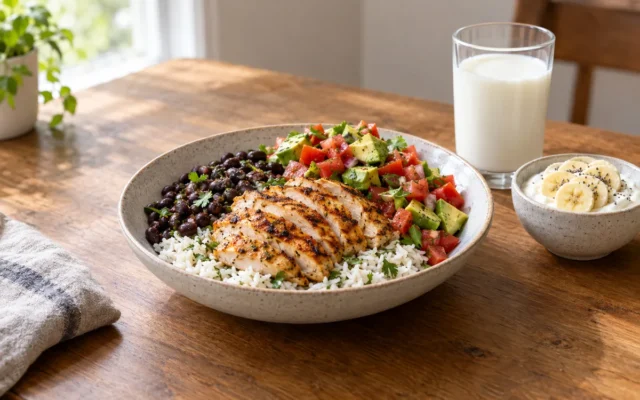
- Rice and beans, in all its versions: a cup of each adds up to about 20 g of protein.
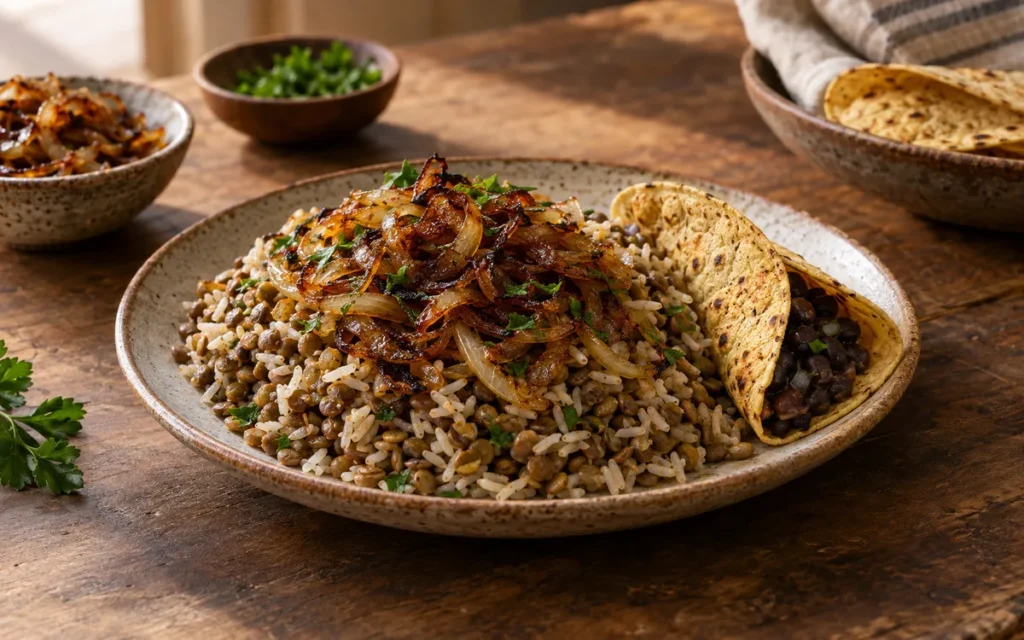
- Lentils and rice, like Middle Eastern mujaddara or Indian dal with rice.
- Corn tortillas and beans: tacos, burritos, bean tostadas.
- Hummus and pita: chickpeas meet wheat.
- Whole-wheat toast with peanut butter: 10–12 g with 2 slices and 2 tablespoons.
- Pasta with chickpeas or lentils: pasta e ceci, or a lentil bolognese.
- Oatmeal made with soy milk and topped with hemp hearts: around 15–18 g at breakfast.
Short on ideas? Our high-protein lentil recipes and high-protein vegetarian meals have full dishes with the protein worked out.
A quick kitchen tip
For tofu that’s golden instead of rubbery, press it dry with paper towels, cut it into 3/4-inch cubes and sear it in a hot pan with a tablespoon of oil for 8–10 minutes, turning every 2–3 minutes. Add the sauce at the very end. For tempeh, steaming it for 10 minutes first takes the bitter edge off.
Plant protein myths
“You have to combine them at the same meal”
You don’t. That rule took off in the 1970s and was later walked back. Your body keeps a pool of amino acids that gets topped up by everything you eat during the day. The Academy of Nutrition and Dietetics states that eating a variety of plant foods over the course of a day provides enough amino acids for healthy adults. Beans at lunch and bread at dinner still count together.
“Plant protein can’t build muscle”
It can, with two caveats. Plant proteins tend to be a bit less digestible and carry a little less leucine per gram than meat or dairy. The fix is simple: eat somewhat more total protein and lean on soy and legumes. A sensible way to do that is to aim for the top of your daily range. We run the numbers in protein for muscle gain.
“Quinoa is the best plant protein”
It’s complete and nutritious, but it has less protein than beans or lentils. Treat it like rice, as a base, then add beans, tofu, or eggs if you eat them.
“Without meat, hitting your target is nearly impossible”
Not true. With legumes at two meals, tofu or tempeh a few times a week, and dairy or eggs if you include them, 80–100 g a day is doable. See how in our guide to eating 100 grams of protein a day, which includes a vegetarian menu.
A fully plant-based day with about 85 g of protein
- Breakfast: 1/2 cup oats cooked in 1 cup soy milk, topped with 2 tbsp hemp hearts (about 20 g).
- Lunch: 1 cup lentil stew over 1 cup brown rice, with a side salad (about 23 g).
- Snack: 1 cup salted edamame (about 18 g).
- Dinner: stir-fry with 5 oz firm tofu, vegetables and noodles (about 25 g).
Total: about 85 g, no protein powder involved. If cost is a concern, dried beans and lentils remain some of the cheapest protein per gram you can buy (see our ranking of the cheapest protein sources).
Key points
- “Complete” means it has all 9 essential amino acids in good proportion.
- Soy, quinoa, amaranth and buckwheat are complete; beans and grains cover each other’s gaps.
- No need to pair them on the same plate: variety over the day is enough.
- Watch the amount too: quinoa is complete, but lentils deliver more protein per cup.
- On a vegan diet, plan with a professional and don’t forget vitamin B12.
Sources
- Harvard T.H. Chan School of Public Health. The Nutrition Source: Protein.
- Young VR, Pellett PL. Plant proteins in relation to human protein and amino acid nutrition. The American Journal of Clinical Nutrition, 1994.
- Melina V, Craig W, Levin S. Position of the Academy of Nutrition and Dietetics: Vegetarian Diets. Journal of the Academy of Nutrition and Dietetics, 2016.
- MedlinePlus. Protein in diet.
- USDA. FoodData Central.
Frequently asked questions
Which plant proteins are complete?
The best known are soy (tofu, tempeh, edamame), quinoa, amaranth and buckwheat. Hemp hearts come close, running slightly low in lysine.
Do I need to combine beans and grains at the same meal?
No. Your body pools the amino acids you eat throughout the day. Eating a variety of legumes, grains, nuts and seeds over the day is enough.
Can you build muscle on plant protein?
Yes. Aim for a bit more total protein and lean on soy and legumes, since plant proteins are slightly less digestible and carry less leucine per gram.
Is quinoa high in protein?
Its protein is complete, but there isn't much of it: about 8 g per cooked cup. A cup of lentils has about 18 g.
Nutrition values are approximate. This content is informational and does not replace advice from a dietitian or doctor, especially if you have kidney disease or another condition that requires a special diet.