10 High-Protein Smoothies Without Protein Powder (18–27 g per Glass)
10 high-protein smoothies with no powder: Greek yogurt, kefir, cottage cheese, tofu and seeds for 18–27 g per glass. Protein chart included.

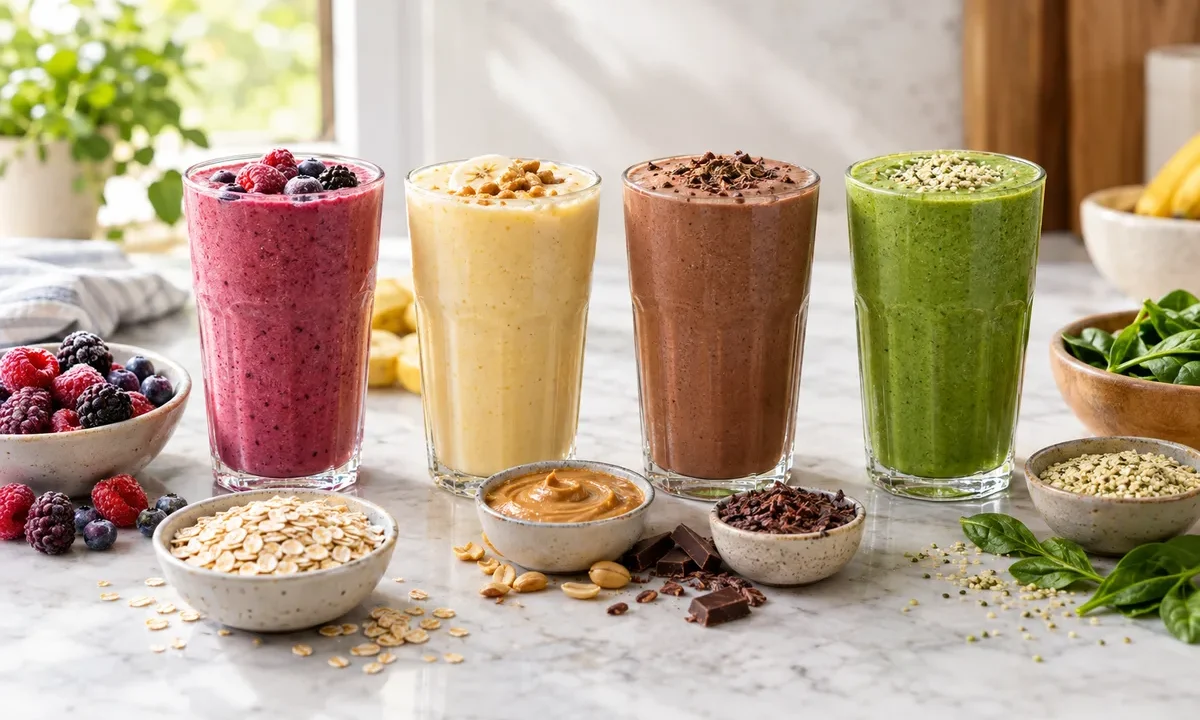
You can make a high-protein smoothie without protein powder by building it on milk, Greek yogurt, kefir, cottage cheese, silken tofu or seeds. The right combination gets you 18 to 27 g of protein per glass, about what a scoop of powder gives you, using groceries you probably already buy. Below are 10 smoothies with approximate protein and calories, a chart of the best bases, and the mistakes that leave a smoothie watery or too sweet.
All numbers are estimates based on USDA FoodData Central. Brands vary, especially for yogurt, kefir and tofu, so check your labels.
In this article
How much protein should a smoothie have?
If your smoothie is breakfast, aim for 20 g or more. That’s the low end of the 20–40 g per meal that the International Society of Sports Nutrition (ISSN) suggests for spreading protein through the day. As a snack, 12–15 g is plenty. Not sure what your daily target is? Our guide to how much protein you need per day has a chart by body weight.
Protein chart: the best smoothie bases
Approximate protein per typical serving.
| Ingredient | Serving | Protein | Calories |
|---|---|---|---|
| Plain nonfat Greek yogurt | 6 oz (170 g) | 17 g | 100 kcal |
| Cottage cheese | 2/3 cup (150 g) | 16 g | 125 kcal |
| Hulled hemp seeds (hemp hearts) | 3 tbsp (30 g) | 10 g | 165 kcal |
| Plain kefir | 1 cup (250 ml) | 9 g | 105 kcal |
| Pumpkin seeds (pepitas) | 1 oz (30 g) | 9 g | 170 kcal |
| 2% milk | 1 cup (250 ml) | 8 g | 125 kcal |
| Unsweetened soy milk | 1 cup (250 ml) | 7 g | 80 kcal |
| Nonfat dry milk powder | 1/4 cup (20 g) | 7 g | 70 kcal |
| Peanut butter | 2 tbsp (32 g) | 7 g | 190 kcal |
| Silken tofu | 3.5 oz (100 g) | 5–7 g | 55 kcal |
| Chia seeds | 1 tbsp (15 g) | 2.5 g | 75 kcal |
| Almond milk | 1 cup (250 ml) | 1 g | 40 kcal |
The short version: Greek yogurt and cottage cheese do the heavy lifting. Almond, oat and rice milks barely register for protein, so if you prefer them, the protein has to come from something else in the blender.
10 high-protein smoothies, no powder needed
Each recipe makes one large glass (about 14–16 oz). Numbers are approximate.
1. Mixed berry Greek yogurt smoothie (27 g, 330 kcal)
Blend 6 oz Greek yogurt, 3/4 cup milk, 1 cup frozen mixed berries and 1 tbsp chia seeds. It’s the easiest one here and the best protein-per-calorie deal. Frozen berries chill the smoothie without watering it down the way ice does.
2. Peanut butter banana oat smoothie (20 g, 500 kcal)
1 1/4 cups milk, 1 ripe banana sliced and frozen, 2 tbsp peanut butter and 1/4 cup rolled oats. The post-workout classic, and filling enough to carry you to lunch. Add 1/2 cup Greek yogurt to push it to about 30 g.
3. Mango ginger kefir smoothie (22 g, 330 kcal)
1 1/4 cups plain kefir, 1/2 cup Greek yogurt, 3/4 cup frozen mango and a thumbnail-sized piece of fresh ginger. Kefir is tangy; ripe mango balances it out. Add a teaspoon of honey only if you really need it.
4. Strawberry cheesecake smoothie with cottage cheese (23 g, 300 kcal)
2/3 cup cottage cheese, 2/3 cup milk, 1 cup frozen strawberries, a little lemon zest and half a graham cracker crumbled on top. Blend the cottage cheese for a full 40 seconds and the curds vanish into something that tastes like dessert. For more ways to use it, see our cottage cheese recipes.
5. Chocolate silken tofu smoothie (24 g, 420 kcal)
7 oz silken tofu, 1 cup soy milk, 1 frozen banana, 1 tbsp unsweetened cocoa and 1 tbsp peanut butter. Dairy-free and thick like a milkshake. Silken tofu is ready to eat straight from the package. Don’t swap in firm tofu: it turns the smoothie gritty.
6. Green hemp seed smoothie (18 g, 360 kcal)
1 cup soy milk, 3 tbsp hemp hearts, a big handful of spinach, 1 pear and half a banana. Hemp hearts blend completely smooth and taste mildly nutty. With ripe fruit, you won’t taste the spinach.
7. Mocha oat smoothie (27 g, 400 kcal)
1 cup milk, 2/3 cup Greek yogurt, 1/4 cup cold brew or chilled coffee, 1/3 cup oats and 1 tsp cocoa. Breakfast and coffee in one glass. Brew the coffee the night before and keep it in the fridge so it doesn’t warm up your smoothie.
8. Pumpkin pie smoothie (23 g, 300 kcal)
2/3 cup Greek yogurt, 1/3 cup canned pumpkin purée (not pumpkin pie filling, which is sweetened), 3/4 cup milk, cinnamon, a pinch of nutmeg and 1 tsp maple syrup. Freeze the leftover pumpkin in ice cube trays for next time.
9. Tropical smoothie with dry milk powder (20 g, 330 kcal)
1 1/4 cups milk, 1/4 cup nonfat dry milk powder, 1 cup frozen pineapple and 1 tbsp unsweetened shredded coconut. Dry milk is the cheapest trick on this list: about 7 g of extra protein and no change in flavor. Whisk it into the milk first so it doesn’t clump.
10. Dairy-free cocoa, oat and seed smoothie (22 g, 480 kcal)
1 1/4 cups soy milk, 1 oz pumpkin seeds, 1/3 cup oats, 1 tbsp cocoa and 2 pitted dates. If your blender isn’t very powerful, soak the seeds and dates in the soy milk for 10 minutes first. Thick and rich, this one works as a full meal.
Common smoothie mistakes
- Too much fruit or juice. Three kinds of fruit plus orange juice can top 40 g of sugar. Stick to one serving of fruit and let yogurt, tofu or seeds fill out the rest. The WHO recommends keeping free sugars, including those in fruit juice, below 10% of daily calories.
- Loading the blender in the wrong order. Liquid first, then soft ingredients (yogurt, tofu, fresh fruit), then frozen fruit and seeds on top. The blades won’t jam.
- Ice instead of frozen fruit. Ice dilutes flavor and protein per sip. Freeze ripe banana slices and berries in single-serving bags.
- Raw eggs. Skip them. They carry a salmonella risk, and you can always eat a hard-boiled egg on the side.
- Making it too far ahead. Cover it, refrigerate it and drink it within 24 hours. Chia and oats thicken as they sit, so add a splash of milk and shake before drinking.
Smoothie packs for the week
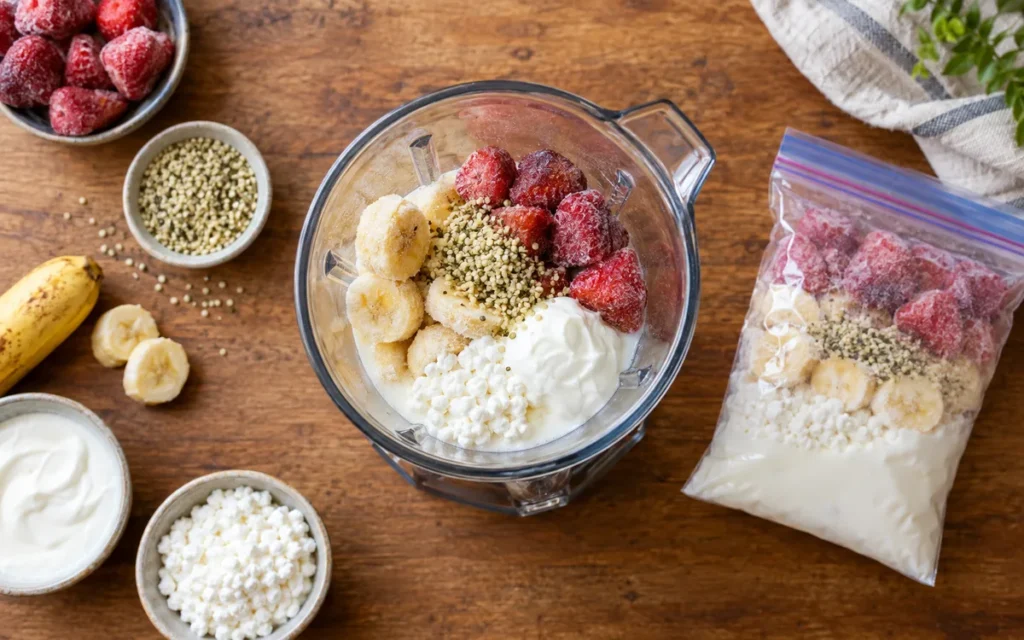
Fill freezer bags with everything solid for each smoothie: fruit, spinach, oats, seeds, even pre-portioned cottage cheese. In the morning, dump a bag into the blender, add your milk or kefir and blend for 60 seconds. The packs keep well in the freezer for 2–3 months. If you like planning ahead like this, our high-protein meal prep for the week works the same way.
Is a smoothie better than a regular breakfast?
Not necessarily. Smoothies are fast, but food you chew tends to keep you full a bit longer. When you have 10 minutes, rotate in our quick, healthy breakfast ideas or a batch of high-protein oatmeal pancakes. For the afternoon slump, try one of our high-protein snacks without protein powder.
If you have kidney disease or diabetes, or you’re pregnant, check with your doctor or a registered dietitian before changing how much protein or sugar you eat.
Key points
- Without powder, you can get 18–27 g of protein per smoothie.
- The strongest bases are Greek yogurt, cottage cheese, kefir and silken tofu; hemp hearts and pumpkin seeds are the best plant add-ins.
- A quarter cup of dry milk powder adds about 7 g and doesn’t change the taste.
- One serving of fruit, no juice, and frozen fruit instead of ice.
Sources
- USDA. FoodData Central.
- Jäger R, et al. International Society of Sports Nutrition Position Stand: protein and exercise. Journal of the International Society of Sports Nutrition, 2017.
- Harvard T.H. Chan School of Public Health. The Nutrition Source: Protein.
- Harvard T.H. Chan School of Public Health. The Nutrition Source: Straight Talk About Soy.
- World Health Organization. Guideline: Sugars intake for adults and children, 2015.
Frequently asked questions
Can you make a high-protein smoothie without protein powder?
Yes. Greek yogurt, cottage cheese, kefir, milk, silken tofu and hemp seeds can get you 18–27 g of protein per glass, about the same as a scoop of powder.
What adds the most protein to a smoothie?
Among everyday foods, Greek yogurt (about 17 g per 6 oz) and cottage cheese (about 16 g per 2/3 cup). Nonfat dry milk powder adds roughly 7 g per 1/4 cup without changing the flavor.
How do I make a dairy-free protein smoothie?
Use soy milk (about 7 g per cup) as the liquid and add silken tofu, hemp hearts or pumpkin seeds. Almond, oat and rice milks have very little protein.
How long does a smoothie last in the fridge?
Keep it covered and drink it within 24 hours. If it has chia or oats it will thicken, so add a splash of milk and shake it before drinking.
Nutrition values are approximate. This content is informational and does not replace advice from a dietitian or doctor, especially if you have kidney disease or another condition that requires a special diet.