High-Protein Vegetarian Meals: Best Sources, Chart and 8 Ideas
How to eat high-protein as a vegetarian: chart of beans, tofu, eggs and dairy, a sample day with 100 g of protein and 8 easy meals.

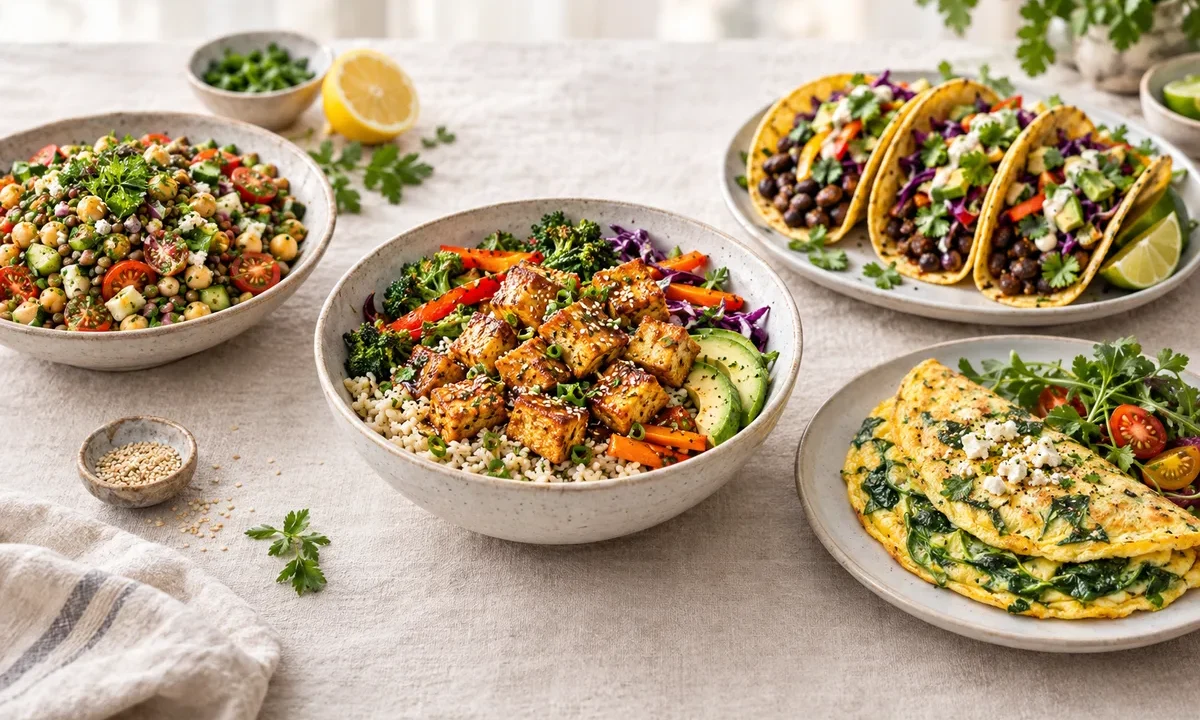
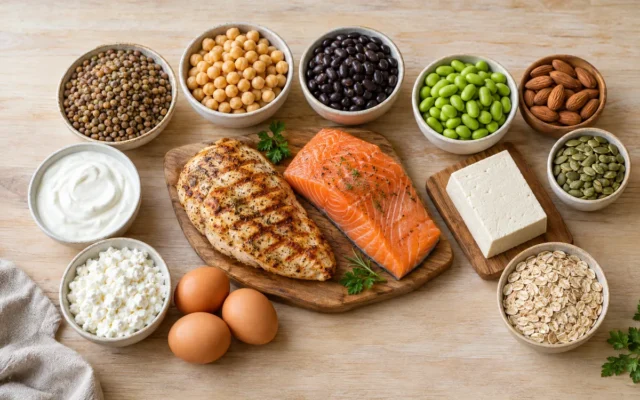
Yes, you can eat high-protein as a vegetarian. The best sources are beans and lentils, soy foods (tofu, edamame), eggs and dairy (Greek yogurt, cottage cheese), backed up by whole grains, nuts and seeds. A well-planned day can easily top 90–100 g of protein without meat or supplements. And you don’t need to pair “complementary” proteins on the same plate: eating a variety over the day is enough.
Below you’ll find a protein-per-serving chart, the truth about protein combining, a sample day and 8 meal ideas.
In this article
Chart: protein in common vegetarian foods
Approximate values calculated with the USDA FoodData Central database.
| Food | Portion | Protein | Calories |
|---|---|---|---|
| Firm tofu | 150 g (5.3 oz) | 26 g | 215 kcal |
| Cooked lentils | 1 cup (about 200 g) | 18 g | 230 kcal |
| Cooked shelled edamame | 1 cup (about 155 g) | 18 g | 190 kcal |
| Plain nonfat Greek yogurt | 170 g (6 oz) | 17 g | 100 kcal |
| Cottage cheese | 150 g (2/3 cup) | 16 g | 120 kcal |
| Cooked black beans | 1 cup (about 170 g) | 15 g | 225 kcal |
| Cooked chickpeas | 1 cup (about 165 g) | 15 g | 270 kcal |
| Cooked kidney beans | 1 cup (about 175 g) | 15 g | 225 kcal |
| Eggs | 2 large | 13 g | 145 kcal |
| Pumpkin seeds | 30 g (1 oz) | 9 g | 170 kcal |
| Cooked quinoa | 1 cup (about 185 g) | 8 g | 220 kcal |
| Cooked pasta | 1 cup (about 140 g) | 8 g | 220 kcal |
| Whole-wheat bread | 2 slices | 8 g | 160 kcal |
| Soy milk | 250 ml (1 cup) | 8 g | 140 kcal |
| Dry-roasted peanuts | 30 g (1 oz) | 7 g | 175 kcal |
| Rolled oats | 40 g (1/2 cup) | 5 g | 150 kcal |
Two things stand out: tofu and edamame are among the most concentrated plant sources, and grains (pasta, bread, quinoa, oats) add up too. A bowl of pasta with lentil sauce, for example, brings both together.
If you eat eggs and dairy (a lacto-ovo vegetarian diet), hitting your protein target is fairly simple. If you’re vegan, soy foods and legumes will do most of the heavy lifting, so try to include them at most meals.
Do you have to “combine proteins” at every meal?
For years, vegetarians were told to pair beans with grains on the same plate to get a “complete” protein. We now know that isn’t necessary at every meal.
In its position paper on vegetarian diets, the Academy of Nutrition and Dietetics explains that protein from a variety of plant foods eaten over the course of the day supplies enough essential amino acids, as long as energy needs are met. A 2019 review in Nutrients (Mariotti and Gardner) reaches a similar conclusion: in adults, protein-rich foods such as legumes, nuts and seeds are enough to fully meet protein needs, and concerns about amino acid deficiency have been substantially overstated. The authors note that the picture is more complex in older adults, so planning matters more at that stage.
What does make sense:
- Vary your sources: beans and lentils, soy, whole grains, nuts, seeds and, if you eat them, eggs and dairy.
- Eat beans, lentils or soy every day: they’re the most protein-rich plant foods and supply lysine, an amino acid that grains are lower in.
- Lean on soy: the Harvard T.H. Chan School of Public Health notes that soy is considered a complete protein because it contains all nine essential amino acids.
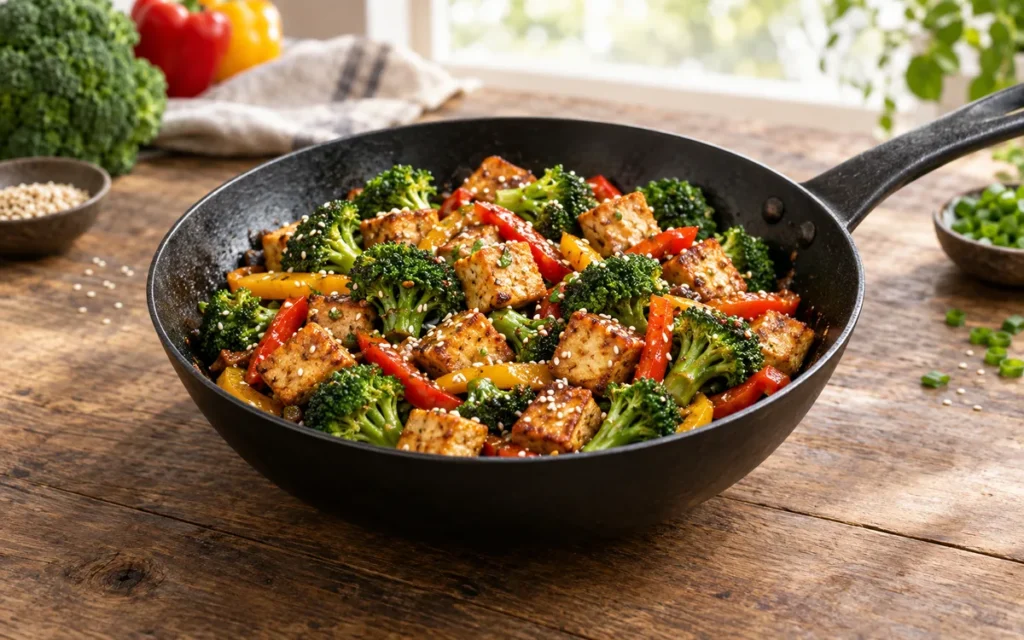
A vegetarian day with about 100 g of protein
Example for one person; approximate values.
| Meal | What to eat | Protein | Calories |
|---|---|---|---|
| Breakfast | Overnight oats: 40 g (1/2 cup) oats, 150 g (2/3 cup) Greek yogurt, 100 ml milk, chia and strawberries | 26 g | 365 kcal |
| Lunch | 3 lentil tacos with queso fresco, pico de gallo and avocado | 22 g | 490 kcal |
| Snack | 150 g (1 cup) edamame with salt and lime | 18 g | 180 kcal |
| Dinner | Bowl with 150 g (5.3 oz) glazed tofu, rice, broccoli and carrot | 34 g | 515 kcal |
| Total | ~100 g | ~1,550 kcal |
Most adults will need to add energy with fruit, bread, more rice or nuts. The point is that protein is covered with no meat and no supplements.
8 high-protein vegetarian meals
1. Spinach tofu scramble (30 g per serving)
Firm tofu crumbled into a skillet with onion, turmeric, cumin, tomato and spinach, served with corn tortillas. The plant-based answer to scrambled eggs.
2. Lentil tacos (22 g per 3 tacos)
Cooked lentils sautéed with spices, piled onto corn tortillas with pico de gallo, queso fresco and avocado. Cheap and quick.
3. Chickpea and spinach curry (19 g per serving)
Chickpeas simmered with tomato, onion, garlic, ginger and curry powder, finished with spinach. Serve over rice with a spoonful of Greek yogurt, which adds protein and cools the heat.
4. Chickpea shakshuka (28 g per serving)
Eggs cooked in a tomato and pepper sauce with chickpeas, served with whole-wheat bread. Keep the lid on until the yolks are set.
5. Rice and beans with a fried egg (24 g per serving)
Black beans stir-fried with rice, onion and pepper, topped with a fried egg. A Latin American classic that’s already high in protein.
6. Black bean and oat burgers (25 g per serving, with bun)
Mashed beans mixed with oats, egg, onion and shredded cheese, shaped into patties and pan-fried. They freeze well raw, separated with parchment.
7. Lentil bolognese (24 g per serving)
A bolognese where lentils replace the meat: onion, carrot, tomato and lentils simmered right in the sauce, finished with Parmesan. One of the easiest ways to get kids eating legumes.
8. Baked potato and spinach frittata (18 g per serving)
Eight eggs with potato, onion, spinach and a little cheese, baked in a dish. Works for dinner, a cold lunch or breakfast, and keeps 3–4 days in the fridge.
Nutrients to watch as a vegetarian
Protein is rarely the issue in a varied vegetarian diet. According to the UK’s NHS, these nutrients deserve more attention:
- Iron: iron from plants is harder to absorb. Include beans, dark leafy greens and fortified cereals, and pair them with vitamin C–rich foods (tomatoes, peppers, citrus).
- Vitamin B12: it’s only found naturally in animal foods. If you eat eggs and dairy regularly you probably get enough; if you eat few or none, you need fortified foods or a supplement recommended by a professional.
- Omega-3s: the main source is oily fish. Plant options include flaxseed, chia, walnuts and canola oil.
If you skip dairy, keep an eye on calcium too: fortified plant milks and tofu made with calcium salts help cover it.
If you’re vegan, pregnant or managing a health condition, a registered dietitian can help you plan.
Easy ways to add plant protein
- Add half a cup of beans or lentils to soups, salads and stir-fries.
- Use Greek yogurt instead of sour cream in sauces and dressings.
- Swap plain rice for rice with lentils, or mix in quinoa.
- Sprinkle pumpkin seeds on salads, oatmeal or yogurt.
- Keep firm tofu in the fridge: it browns in 10 minutes.
- Rinse canned beans to cut the sodium.
The bottom line
- The best vegetarian sources: tofu, edamame, lentils, beans, chickpeas, eggs and dairy.
- No need to combine proteins on one plate: variety across the day is what counts.
- A well-planned day easily reaches 90–100 g of protein.
- Watch iron, vitamin B12 and omega-3s, especially if you eat few or no animal foods.
Keep reading
- To take it a step further, see a sample menu to eat 100 g of protein a day.
- You may also find useful the cheapest protein sources, ranked by cost.
Sources
- Melina V, Craig W, Levin S. Position of the Academy of Nutrition and Dietetics: Vegetarian Diets. Journal of the Academy of Nutrition and Dietetics, 2016.
- Mariotti F, Gardner CD. Dietary Protein and Amino Acids in Vegetarian Diets—A Review. Nutrients, 2019.
- Harvard T.H. Chan School of Public Health. The Nutrition Source: Straight Talk About Soy.
- NHS. The vegetarian diet.
- USDA. FoodData Central.
Frequently asked questions
Do vegetarians need to combine beans and grains at the same meal?
No. The Academy of Nutrition and Dietetics says that a variety of plant foods eaten over the day supplies all the essential amino acids, as long as you eat enough overall.
Which plant food has the most protein?
Among common options: firm tofu (about 26 g per 150 g / 5.3 oz), edamame (about 18 g per cup) and cooked lentils (about 18 g per cup). Soy is also considered a complete protein.
How much protein can a vegetarian day provide?
A day with Greek yogurt overnight oats, lentil tacos, edamame and a tofu bowl adds up to about 100 g of protein, with no meat or supplements.
What nutrients should vegetarians watch?
Mainly iron, vitamin B12 and omega-3s, plus calcium if you skip dairy. If you eat few or no animal foods, ask a professional about fortified foods or a B12 supplement.
Nutrition values are approximate. This content is informational and does not replace advice from a dietitian or doctor, especially if you have kidney disease or another condition that requires a special diet.